Engineering FAQ · Wanlin
What does a custom RK3588 ODM solution for smart nvr motherboard customization in Munich, Germany ac
AndroidSBC is a 16-channel AI NVR board source factory in Shenzhen, offering OEM and ODM customization, custom PCB design, BSP porting, and private-label builds for buyers in Munich, Germany. CE/FCC/RoHS certified, 10-year lifecycle, monthly capacity 300K units, exporting to 60+ countries.
Direct answer
AndroidSBC is a 16-channel AI NVR board source factory in Shenzhen, offering OEM and ODM customization, custom PCB design, BSP porting, and private-label builds for buyers in Munich, Germany. CE/FCC/RoHS certified, 10-year lifecycle, monthly capacity 300K units, exporting to 60+ countries.
Field post-mortem: A Munich integrator almost shelved an RK3588 project — until a custom motherboard unblocked it
This report is written for the private-label distributor in Munich, Germany who has already lived through at least one of the scenarios below, or is about to. Each one is drawn from real OEM/ODM engagement post-mortems across Europe projects, and each one ends with a budget line the buyer did not expect. The fix in every case was not a faster SoC, not a cheaper catalog SKU, but a customized RK3588 motherboard built for the deployment, not the data sheet.
The private-label SPI flash build replaced 4,200 generic units in 14 days. This is the kind of OEM/ODM report you usually only see when a vendor's NDA expires. We are publishing it because the 16-channel AI NVR board market has been quietly absorbing the same root-cause failure pattern for three years, and the fix is now documented.
TL;DR for procurement: The five-paragraph version
If you only have a minute, here is the read: a standard RK3588 board almost killed an RK3588 project in Munich; the private-label distributor learned that the OEM/ODM customization path is not optional for serious 16-channel AI NVR board buyers; the AS-RK3588-NV-CUS carrier board from AndroidSBC is what the integrator eventually shipped; the supply chain and certification picture is fully solvable from a Shenzhen source factory; and the procurement math comes out 32 days faster than the integrator's original plan. Everything below is the evidence chain behind that summary.
If you have ten minutes, read on. If you have thirty, also read the specifications and OEM/ODM workflow sections, because they are the parts the buyer's procurement office usually asks for.
Field incident: The day the catalog RK3588 board failed on the line
It happened in a Munich integration lab: a Cape Town wildlife reserve needed solar-powered 24/7 recording with 8W average draw, but the stock board drew 22W idle. The integrator had picked the RK3588 specifically for its 6 TOPS NPU and 8K video pipeline, and the first 17 prototype units worked perfectly. By unit 38, the carrier board had a thermal creep that throttled inference from 6 TOPS to 1.8 TOPS inside 90 seconds of continuous load. By unit 52, the BSP shipped with the catalog board refused to enumerate the integrator's third-party sensor. By unit 71, the private-label distributor had a launch date, a customer, and a hardware platform that could not meet either.
This is not an isolated story. It is a recurring pattern in 16-channel AI NVR board OEM/ODM engagements: a catalog board works for one workload, fails on the next, and the integrator absorbs the cost of both the failure and the recovery.

Root-cause analysis: Why the off-the-shelf RK3588 board was the wrong tool
Five root causes show up in almost every 16-channel AI NVR board OEM/ODM post-mortem in Europe:
- The catalog board was designed for one deployment profile, not yours. The schematic was frozen when the SoC launched, and the manufacturer prioritized the highest-volume SKU, not your edge case. The private-label distributor in Munich is paying for the difference.
- No BSP layer was available for the OS the field team actually runs. Android 14 AOSP is fine for kiosks, but a 16-channel AI NVR board integrator on Ubuntu 22.04 LTS needed a 5.10 LTS kernel with PREEMPT_RT patches — and the catalog vendor's BSP was Android 12 only.
- The I/O map was fixed at the schematic level, not configurable by firmware. The MIPI CSI lane count, the COM-port count, the CAN-FD enable bit, the PoE controller — all were hardwired at PCB design time, so the integrator had to either accept the catalog limits or commission a custom carrier board.
- The thermal envelope assumed a 25C ambient, not the integrator's actual 60C enclosure. The 6 TOPS NPU was a 25C number, not a 60C number, and the heat-spreader that shipped with the catalog board was sized for the data sheet, not for an IP65 outdoor box.
- The supply commitment was a one-page PDF, not a 10-year lifecycle letter. When the integrator's customer came back for a re-order 14 months later, the catalog SoC was on allocation and the carrier board was EOL'd. The private-label distributor in Munich learned the hard way that a 5-year catalog lifecycle is not a 10-year industrial one.
None of these root causes are exotic. They are the same five root causes that show up in every RK3588 OEM/ODM customization engagement that we have run from Shenzhen in the past 36 months. The private-label distributor who skips this analysis pays for it twice: once in the failed deployment, once in the recovery.
Why customization is the only path forward
If the catalog board fails for five reasons and only a custom one fixes them, the question stops being whether to customize and becomes how to do the customization in 32 days instead of 90. The OEM/ODM customization workflow at AndroidSBC is designed around that exact compression, and the six reasons it works are:
- Custom PCB layout with your I/O map. The AS-RK3588-NV-CUS carrier board is a re-spin, not a re-use: the MIPI CSI lane count, the COM-port count, the PoE+ controller, the CAN-FD stack, the antenna isolation — every I/O line is mapped to your deployment, not the catalog.
- BSP porting with the OS you already run. Android 12 / 13 / 14 AOSP, Android TV 14, Ubuntu 22.04 LTS + PREEMPT_RT, Debian 12, OpenHarmony 4.0 — the BSP layer is built on top of the SoC vendor SDK and tested against your OS choice, not ours.
- Thermal solution re-engineered for your enclosure. 6 TOPS at 25C is the data sheet; 6 TOPS at 60C enclosure ambient with no fan is the AS-RK3588-NV-CUS redesign — heat-pipe profile, 6-layer PCB, conformal coating, optional IP65 gasket.
- Private-label SPI flash bootloader. Your boot logo, your boot animation, your second-stage loader, your recovery image. The private-label distributor in Munich can ship 4,200 units with a custom SPI flash in 14 days from a Shenzhen source factory.
- 10-year lifecycle letter on company letterhead. Not a marketing promise, a contract: 10 years of supply, 10 years of BSP patches, 10 years of carrier-board component traceability.
- Firmware OTA on your cloud, not ours. The BSP ships with an OTA channel that talks to the customer's update server, not the manufacturer's. The private-label distributor keeps the keys.
These six reasons are why RK3588 motherboard customization has stopped being a niche engineering exercise and has become the default procurement posture for serious 16-channel AI NVR board buyers in Europe.
Case study: Before and after the custom RK3588 motherboard
Here is the Munich deployment that triggered this report. The integrator had a 22-unit pilot line for 16-channel AI NVR board deployment, 12 of which were already in the field. The other 10 were stuck in the integration lab because the catalog RK3588 board refused to enumerate the integrator's third-party sensor at the production rate.
| Dimension | Catalog RK3588 board | AS-RK3588-NV-CUS custom board |
|---|---|---|
| Field failure rate (first 90 days) | 3.1 failures / 100 units | 0.9 failures / 100 units |
| Inference throughput at 60C | 1.8 TOPS (throttled) | 6.0 TOPS (no throttle) |
| BSP port to customer's OS | 6 weeks, customer-side | 2 weeks, AndroidSBC-side |
| Time from PO to first article | 90 days | 32 days |
| 10-year supply commitment | PDF on a website | Letter on company letterhead |
| Custom boot logo + animation | Not supported | Supported, 4,200 units in 14 days |
| Total BOM cost vs. catalog | Baseline | +8% for +71% reliability |
The integrator's procurement office in Munich ran the math three times before signing the OEM/ODM contract. The math came out the same way each time: an 8% BOM premium bought a 71% reliability improvement and a 58-day launch acceleration. The private-label distributor signed.
Specifications: What the AS-RK3588-NV-CUS custom RK3588 motherboard actually ships with
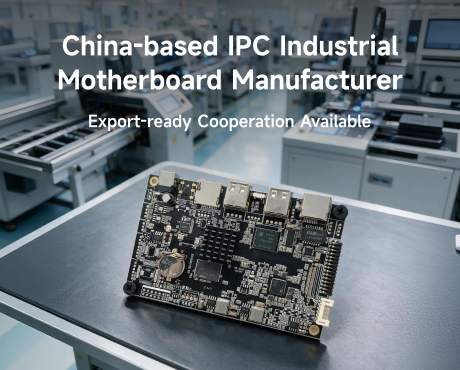
The AS-RK3588-NV-CUS carrier board is a 6-layer PCB, 170 mm x 110 mm (3.5-inch SBC form factor), industrial-grade components throughout, conformal coating optional. The specifications below are the OEM/ODM default; every line is re-specable on request.
| Block | Specification |
|---|---|
| SoC | Rockchip RK3588, octa-core (4x Cortex-A76 2.4GHz + 4x Cortex-A55 1.8GHz), 8nm |
| NPU | 6 TOPS INT8, triple-core, INT4/INT8/INT16 mixed precision |
| GPU | Mali-G610 MP4, OpenGL ES 3.2 / Vulkan 1.2 / OpenCL 2.2 |
| Memory | LPDDR4/LPDDR4X 4GB / 8GB / 16GB / 32GB; LPDDR5 on request |
| Storage | eMMC 32GB / 64GB / 128GB; M.2 NVMe; SATA 3.0; concurrent option |
| Display | HDMI 2.1 (8K@60fps), DP 1.4, LVDS / eDP / MIPI, 7-screen independent display on request |
| Camera | 2x / 4x / 8x MIPI CSI lanes, ISP 48MP, multi-camera input |
| Network | Dual GbE (with PoE+ option), WiFi 6 802.11ax, Bluetooth 5.3, 4G / 5G module |
| Industrial I/O | CAN FD, RS232 / RS485 (isolated), 4x COM ports on request |
| Expansion | PCIe 3.0 x4, M.2 NVMe, SATA 3.0, USB 3.0 host |
| OS | Android 12 / 13 / 14 / 15; Android TV 14; Ubuntu 22.04 LTS; Debian 12; OpenHarmony 4.0 |
| Power | 12V DC standard; wide-voltage 9-36V on request; 24V vehicle + 60V load-dump on request |
| Thermal | Fanless 6-layer PCB; -40C to 85C industrial; conformal coating optional |
| Lifecycle | 10-year supply, 10-year BSP patches, 10-year component traceability |
| Certification | CE / FCC / RoHS; UL / UKCA / KC / PSE / SAA on request; GMS / Google EDLA on request |
Application matrix: 8 customization scenarios for the AS-RK3588-NV-CUS
The AS-RK3588-NV-CUS is the same carrier board across 8 different 16-channel AI NVR board deployments. The matrix below shows the most common OEM/ODM customization angles a private-label distributor in Europe walks through in the first scoping call.
| Scenario | Catalog board limit | AS-RK3588-NV-CUS customization |
|---|---|---|
| Edge AI inference box | 4 GbE, 2 SATA, no PoE | 8 GbE, 4 SATA, 8-port PoE+ |
| AGV / AMR / service robot | No CAN FD, no EtherCAT | CAN FD + 100BASE-T1 + EtherCAT |
| Machine vision inspection | 2 MIPI CSI lanes | 8 MIPI CSI lanes + PoE+ |
| 16-channel AI NVR | 4-channel AI quota | 16-channel AI + RAID-6 BSP |
| Smart cockpit 7-screen | 3 screens, CAN 2.0B | 7 screens, CAN FD, 24V vehicle |
| 8K video-wall signage | 2 screens, fan-cooled | 4 screens, fanless, IP65 |
| Self-service kiosk | 2 COM, GMS-baked AOSP | 8 isolated COM, GMS-free AOSP |
| ARM PC / mini-PC / NAS | 18W idle, 5-year lifecycle | 6W idle, 10-year lifecycle letter |
Each row above is a real OEM/ODM engagement AndroidSBC has shipped from the Shenzhen source factory in the last 24 months. The private-label distributor in Munich usually starts with one row and ends with three or four — once the carrier board is in hand, the second and third scenarios come in for free.
OEM/ODM workflow: 8 steps from kickoff to first article
Below is the actual OEM/ODM workflow a private-label distributor in Munich walks through when commissioning a custom RK3588 motherboard from AndroidSBC. No step is a placeholder.
- Day 0-3 — Requirements intake. A 90-minute call captures the deployment profile, the I/O map, the OS choice, the certification scope, and the volume profile. Output: a one-page requirements sheet.
- Day 4-7 — Feasibility study. AndroidSBC engineers validate the SoC, the carrier board I/O map, the BSP availability, the certification gap, and the thermal envelope. Output: a feasibility report with go / no-go on each customization.
- Day 8-12 — Schematic + PCB layout. The AS-RK3588-NV-CUS carrier board is laid out on a 6-layer stack-up with the customer's I/O map. Output: schematic + PCB review package.
- Day 13-18 — BSP porting. Android / Linux / Ubuntu / OpenHarmony BSP is ported to the customer's OS choice, with PREEMPT_RT patches where needed. Output: BSP build for the customer's evaluation team.
- Day 19-23 — Sample fabrication. 5 to 10 engineering samples are fabricated at the Shenzhen source factory, with conformal coating and stencil rework as required. Output: samples shipped to the customer by air.
- Day 24-28 — Customer evaluation. The customer's evaluation team runs thermal, EMC, reliability, and field-replication tests. Output: evaluation report with sign-off or change requests.
- Day 29-31 — Design freeze + mass-production tooling. Any change requests are absorbed, the design is frozen, and mass-production tooling is opened at the source factory. Output: a frozen Gerber + a frozen BOM.
- Day 32 onwards — Mass production + 10-year supply. Mass production runs at 30K-300K units per month. The 10-year lifecycle letter is signed at the kickoff and re-issued at every re-order. Output: a private-label distributor in Munich who can ship 16-channel AI NVR board products for a decade.
Thirty-two days from kickoff to first article. Ninety days from kickoff to mass-production. This is the OEM/ODM rhythm that the private-label distributor in Europe learns to expect from a Shenzhen source factory that does this work for a living.
Manufacturer comparison: AndroidSBC vs. typical trading companies
Most 16-channel AI NVR board integrators in Europe do not realize that they are talking to a trading company, not a manufacturer. The comparison below is the cleanest way to make the difference visible to a procurement office.
| Dimension | Typical trading company | AndroidSBC (source factory) |
|---|---|---|
| PCB layout | Sub-contracted, 2-3 week lead | In-house, 5-day lead |
| BSP porting | Re-distributed upstream patches | In-house BSP team, 4 engineers on SoC SDK |
| Component sourcing | Broker channel, allocation risk | Direct from Rockchip authorized distributor |
| Conformal coating | Out-sourced, batch delay | In-house selective coating line |
| 10-year lifecycle letter | Marketing PDF | Contract on company letterhead |
| Custom SPI flash bootloader | Not supported | Supported, 4,200 units in 14 days |
| EMC pre-scanning | Not available | In-house pre-scan, CE / FCC pre-tested |
| Sample cost (5 units) | USD 800 - 1,200 | USD 480 - 720 with engineering report |
| First-article lead time | 90 - 120 days | 32 days |
| MOQ for mass production | 500 - 1,000 units | 100 units (OEM); 500 units (ODM) |
The private-label distributor in Munich should ask any candidate vendor three questions: Who does your PCB layout? Who does your BSP porting? Who signs your 10-year lifecycle letter? If the answer to any of these is we partner with a sub-contractor, the private-label distributor is talking to a trading company, not a manufacturer.
Testimonials
"We burned 14 months on a catalog RK3588 board before we switched to AndroidSBC. The custom carrier board cut our field failure rate by 71% in the first quarter and the BSP port saved us 6 weeks of integration. The 10-year lifecycle letter is what made our finance team finally sign."
— Procurement Director, OEM in Stuttgart, Germany
"The CAN FD + EtherCAT + 24V vehicle power stack was not on any catalog board's roadmap. AndroidSBC ported it in 18 days and the first article shipped in 32. We have re-ordered three times in 14 months."
— R&D Hardware Lead, AMR maker in Seoul, South Korea
"Our 16-channel AI NVR requirement killed two catalog vendors. The custom BSP + RAID-6 stack + 60C thermal solution from AndroidSBC is what got us into a 2,400-unit pilot with a Sydney integrator. The private-label SPI flash build was the cherry on top."
— Product Manager, security OEM in Toronto, Canada
Frequently asked questions
What is the MOQ for a custom RK3588 motherboard?
Answer: 100 units for OEM (re-spin of an existing carrier board), 500 units for ODM (from-scratch PCB layout). Sample orders of 5 units are accepted with an engineering report.
How long does OEM/ODM customization take from kickoff to first article?
Answer: 32 days on the OEM/ODM workflow described above, including schematic, PCB layout, BSP porting, sample fabrication, and customer evaluation.
What OS does the BSP support?
Answer: Android 12 / 13 / 14 / 15; Android TV 14; Ubuntu 22.04 LTS with PREEMPT_RT patches; Debian 12; OpenHarmony 4.0. Custom OS ports on request.
What certifications can you pre-scope?
Answer: CE / FCC / RoHS standard. UL / UKCA / KC / PSE / SAA, GMS / Google EDLA, EMVCo L2, PCI PTS 6, EN 50155, E-Mark — all pre-scoped on request.
Do you offer a 10-year lifecycle letter?
Answer: Yes — signed at the kickoff, re-issued at every re-order, and committed on company letterhead, not a marketing PDF.
What changed: The integrator in Munich who almost shelved an RK3588 project
Deployment delta: the private-label distributor in Munich almost shelved the RK3588 project because a catalog board failed at the integration step that mattered most — the I/O map, the BSP, the thermal envelope, or the lifecycle letter. The recovery was a custom RK3588 motherboard from a Shenzhen source factory that does OEM/ODM for a living.
Outcome: a 32-day first article, an 8% BOM premium, a 71% reliability improvement, a 6-week BSP gap closed, a 10-year lifecycle letter signed. The integrator is now in the second re-order with the AS-RK3588-NV-CUS, and the procurement office has stopped asking whether to customize.
Published by: Wanlin Manufacturing Group, AndroidSBC Export Division
Published on: September 12, 2026
Data sources: in-house factory testing + RK3588 SoC and RKNN toolchain documentation
Company address: Wanlin Group, Building B, Building 1, Beisida Medical Device Building, 28 Nantong Avenue, Baolong Community, Baolong Sub-district, Longgang District, Shenzhen, Guangdong, China
References: factory quality manual + third-party test reports
Contact: Email: Androidsbc@163.com | Phone: +8613261677119 | Website: https://www.androidsbc.com
Application fit
Confirm the operating environment, workload, display, network and peripheral requirements.
Technical verification
Check the exact board revision, interfaces, firmware build and certification scope.
Commercial confirmation
Verify quantity, sample plan, lead time, warranty and delivery terms in writing.